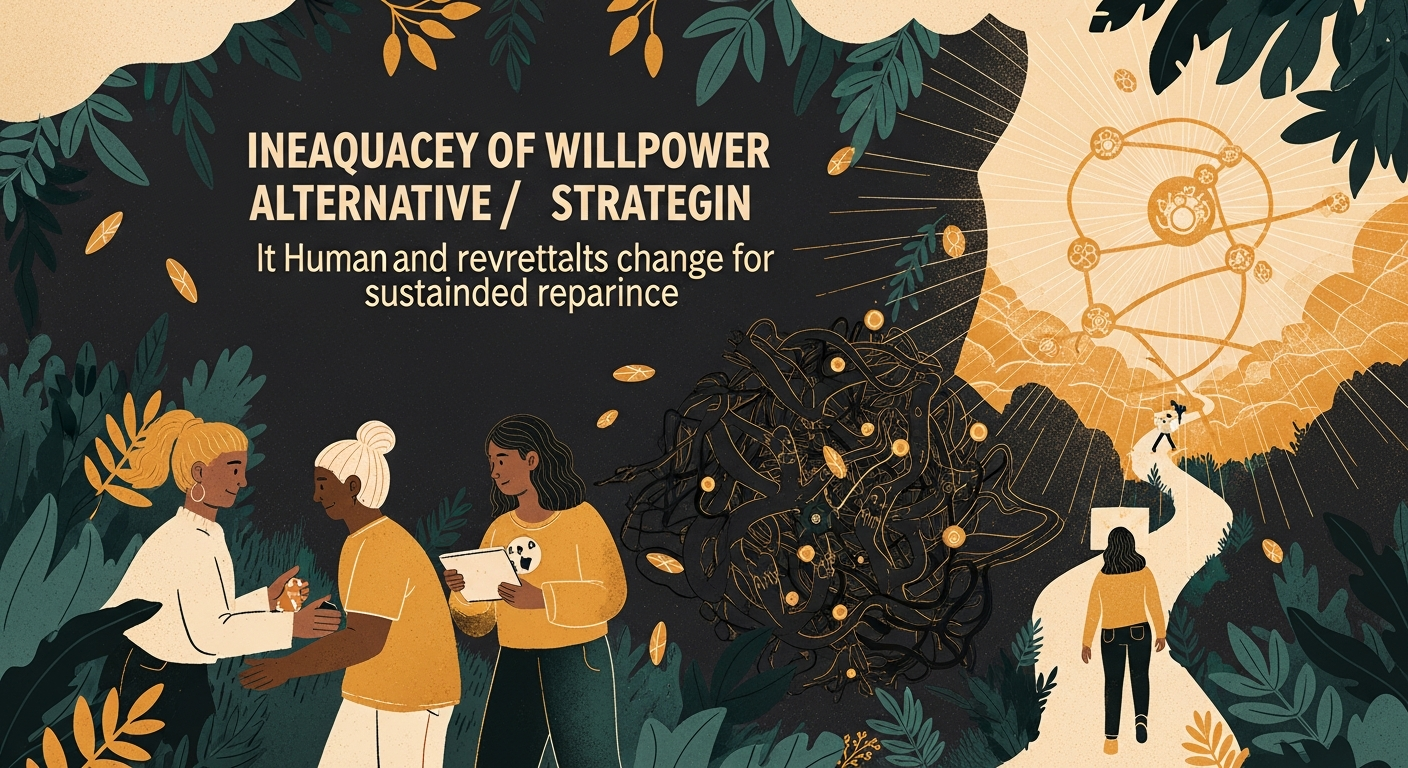
Gambling addiction isn't a willpower problem — it's a brain chemistry issue. Learn what actually works for recovery when willpower alone fails.
"This is home, this is home" — We Get You, 12&Well
You've probably heard it before — from someone who loves you, from a voice inside your own head, maybe even from a therapist who meant well. Just stop. You know it's destroying everything. Why can't you just use some willpower? Gambling addiction is not a failure of willpower. It is a neurological condition in which the brain's reward system has been hijacked by compulsive behavior, making "just stopping" as unrealistic as willing away a broken bone. Willpower — the conscious decision to resist an urge — relies on brain circuits that compulsive gambling actively impairs, which is why recovery requires tools, connection, and support rather than sheer determination.
If that sentence feels like relief, stay here for a minute. This is for you.
The Willpower Myth and Why It Hurts
The idea that you should be able to quit gambling through willpower alone is one of the most damaging myths in addiction. It keeps people stuck in cycles of shame. You try to stop. You white-knuckle it for a few days or weeks. The urge comes roaring back. You give in. And then you feel worse than before — not just because of the money or the lies, but because you believe something is fundamentally broken in you.
Nothing is broken in you. Your brain is doing exactly what a brain does when its reward circuitry has been reshaped by compulsive behavior.
According to the American Psychological Association, compulsive gambling activates the same dopamine-driven reward pathways as substance use disorders — the mesolimbic system, sometimes called the brain's "pleasure highway" (APA, Diagnostic and Statistical Manual of Mental Disorders, 5th Edition). The DSM-5 reclassified gambling disorder under "Substance-Related and Addictive Disorders" precisely because the neurological evidence was so clear. This is not a character flaw. This is brain chemistry.
And yet the willpower narrative persists.
What's Actually Happening in Your Brain
To understand why willpower fails, you need to understand what gambling does to your dopamine system — and why knowing this can be the first step toward real freedom.
The Dopamine Hijack
Dopamine is your brain's anticipation chemical. It doesn't just fire when something good happens — it fires in anticipation of something good happening. That distinction matters.
When you gamble, your brain releases dopamine during the buildup — the almost-win, the waiting, the possibility. Research published in Neuroscience & Biobehavioral Reviews found that people with gambling disorder show significantly altered dopamine transmission in the ventral striatum, the same region implicated in substance addiction (Clark et al., 2019). Your brain has literally learned to crave the cycle, not just the outcome.
Over time, this creates tolerance. The same bet doesn't produce the same rush. You need more — higher stakes, longer sessions, bigger risks. Meanwhile, the prefrontal cortex — the part of your brain responsible for decision-making, impulse control, and long-term planning — becomes less effective at overriding the urge.
Willpower Lives in the Prefrontal Cortex
Here's the part nobody tells you when they say "just stop."
Willpower is a function of the prefrontal cortex. It's the executive decision-maker. And in compulsive gambling, that region is functionally compromised. A 2017 study in Biological Psychiatry demonstrated that individuals with gambling disorder show reduced prefrontal cortex activation during decision-making tasks compared to controls (Potenza et al., 2017).
You're being asked to fight a dopamine-flooded reward system with the one tool that the addiction has already weakened. It's like asking someone to run a marathon on a broken leg and then blaming them when they can't finish.
This is why the rooms exist. This is why people find recovery through programs, community, sponsors, therapists, and tools — not through gritting their teeth harder.
The Shame Spiral That Keeps You Stuck
When you believe willpower should work and it doesn't, something insidious happens: you internalize the failure.
The National Council on Problem Gambling reports that people with gambling disorder are significantly more likely to experience depression, anxiety, and suicidal ideation — with approximately 1 in 5 individuals with gambling disorder attempting suicide (NCPG, 2023). The shame spiral is not a side effect. For many, it becomes the engine that drives the next bet. You feel terrible. You need escape. The thing that once gave you escape is gambling. And so you go back, not because you lack willpower, but because your brain is seeking the only relief it knows.
Breaking this cycle requires something willpower can never provide: a new source of relief.
That's what recovery is. Not perfection. Not white-knuckling. A new way to live — one where the urge doesn't have to win because you've built something stronger around you.
What Actually Works When Willpower Doesn't
If willpower isn't the answer, what is? Recovery research and lived experience point to the same set of principles: external support, environmental change, brain-rewiring practices, and honest community.
External Accountability and Community
Gamblers Anonymous uses a fellowship model for a reason. When you sit in a room and hear someone describe the exact same cycle you've been hiding for years — the lies, the chasing, the 3 a.m. dread — something shifts. You're not relying on your own willpower anymore. You're borrowing strength from the room. You're calling your sponsor at 11 p.m. when the urge hits instead of opening an app.
The 12-step framework doesn't ask you to be strong enough on your own. It asks you to admit that you aren't — and that admission is where recovery begins.
There's a reason the lyric "this is home" resonates with so many people who find the rooms or find a recovery community of any kind. When you've been isolated in shame for months or years, belonging is its own kind of medicine.
GA isn't the only path, though. SMART Recovery offers a cognitive-behavioral approach. Individual therapy — particularly CBT — has strong evidence for gambling disorder. And digital tools are expanding access for people who can't get to a meeting or aren't ready to walk through that door yet.
What matters is that you're not trying to do this alone through sheer force of will.
Environmental Barriers
If willpower can't consistently override the urge, you need to make it harder for the urge to win. This means building real barriers between you and gambling.
- Block access. Tools like the 12&Well Browser Shield block over 264,000 gambling domains on your browser. It takes 30 seconds to install and removes the "just one click" trap that willpower alone can't stop.
- Hand over financial control. Many people in recovery give a trusted person access to their accounts — not forever, but for the season when the urge is loudest. This isn't weakness. It's strategy.
- Remove triggers. Self-exclude from casinos. Delete gambling apps. Unfollow sports betting accounts. Every barrier you place between yourself and a bet is one less fight your prefrontal cortex has to win.
Urge Management — Riding the Wave
Urges are neurological events. They peak and they pass. Research suggests that most gambling urges, when not acted on, subside within 15 to 30 minutes (Grant & Kim, Pathological Gambling: A Clinical Guide to Treatment, 2003).
Knowing this changes the game. You don't need willpower to never feel the urge. You need a strategy to survive the next 20 minutes.
Grounding exercises, breathing techniques, calling someone in your network, or using a guided urge timer — these aren't soft alternatives to willpower. They're evidence-based tools that work with your brain instead of against it. The 12&Well Urge Surfing Tool offers a guided timer with grounding prompts and recovery music — no signup, free, available at 2 a.m. when nobody else is awake.
24/7 Support for the Moments Between Meetings
Recovery doesn't happen only in meeting rooms. It happens at 1 a.m. when you can't sleep. It happens on payday. It happens when your spouse asks a question about money and your chest tightens.
This is why Hope AI, 12&Well's 24/7 AI companion, exists — for the spaces between meetings, between therapy sessions, between sponsor calls. It remembers your story, checks in daily, and walks alongside you in your 12-step journey or whatever path you're on. It's not a replacement for human connection. It's a bridge for the moments when human connection isn't available.
What Family Members Need to Hear
If you love someone struggling with compulsive gambling, the willpower myth hurts you too. You've probably said it — Why can't you just stop? — and felt guilty when it didn't work. Or you've watched them promise to stop, believed them, and then discovered it never stopped at all.
Understanding that this is a neurological condition — not a choice, not a moral failing — can change how you show up for your person and for yourself.
Gam-Anon meetings offer a space specifically for family members. The Am I Enabling? Assessment on 12&Well can help you understand whether your support has crossed into patterns that unintentionally make recovery harder. It's free, it takes five minutes, and it's completely private.
You deserve your own recovery too. The NCPG estimates that for every person with a gambling disorder, an additional 4 to 6 people are significantly affected — spouses, children, parents, friends (NCPG, 2023). Your pain is real and it's not secondary.
Recovery Can Start Anywhere
You don't have to hit some mythical bottom. You don't have to lose everything. You don't have to be "ready" in the way movies depict readiness. Recovery can start with reading this article. It can start with installing a browser shield. It can start with calling 1-800-522-4700 and not saying anything for the first 30 seconds.
12&Well exists because we believe recovery should meet you where you are — whether that's in the rooms, on your phone at midnight, listening to a song that finally puts words to what you've been feeling, or using a free tool that helps you see the financial truth clearly for the first time.
You're not here because you lack willpower. You're here because you're looking for something that actually works.
That search — that's the first step. And you've already taken it.
If you or someone you love is struggling with compulsive gambling, call the National Problem Gambling Helpline at 1-800-522-4700. It's free, confidential, and available 24/7. You can also text 1-800-522-4700 or chat at ncpgambling.org.
Frequently Asked Questions
Why can't I just use willpower to stop gambling?
Compulsive gambling alters your brain's dopamine reward system and weakens the prefrontal cortex — the region responsible for impulse control and decision-making. Asking willpower alone to override these neurological changes is like asking a weakened muscle to lift its heaviest weight. Recovery works when you combine community, environmental barriers, professional support, and daily tools rather than relying on determination alone.
Is gambling addiction a real addiction or just a lack of self-control?
It's a real addiction. The DSM-5 classifies gambling disorder under "Substance-Related and Addictive Disorders" because it activates the same brain reward pathways as drug and alcohol addiction (APA, 2013). Brain imaging studies confirm altered dopamine transmission and reduced prefrontal cortex function in people with gambling disorder. It is a neurological condition, not a self-control problem.
What can I do instead of relying on willpower to quit gambling?
Effective alternatives include attending Gamblers Anonymous or SMART Recovery meetings, working with a therapist trained in CBT for gambling, installing blocking tools like the 12&Well Browser Shield, using urge management techniques during craving windows, building a support network through sponsors or peer groups, and accessing 24/7 support through tools like Hope AI. Most people in sustained recovery use multiple strategies — not willpower in isolation.
How can I help a family member who can't stop gambling?
Start by understanding that compulsive gambling is a brain-based condition — not a choice. Attend a Gam-Anon meeting for your own support. Set clear financial boundaries. Avoid covering debts or enabling continued gambling. Encourage — but don't force — your loved one to explore recovery options. Call the National Problem Gambling Helpline at 1-800-522-4700 for guidance specific to your situation.
This content is for informational purposes only and is not a substitute for professional medical advice, diagnosis, or treatment.
recovery doesn't happen alone.
Join the waitlist for 12&Well — 24/7 AI support, geo protection, recovery music, and tools for the whole family.
Join the Waitlist