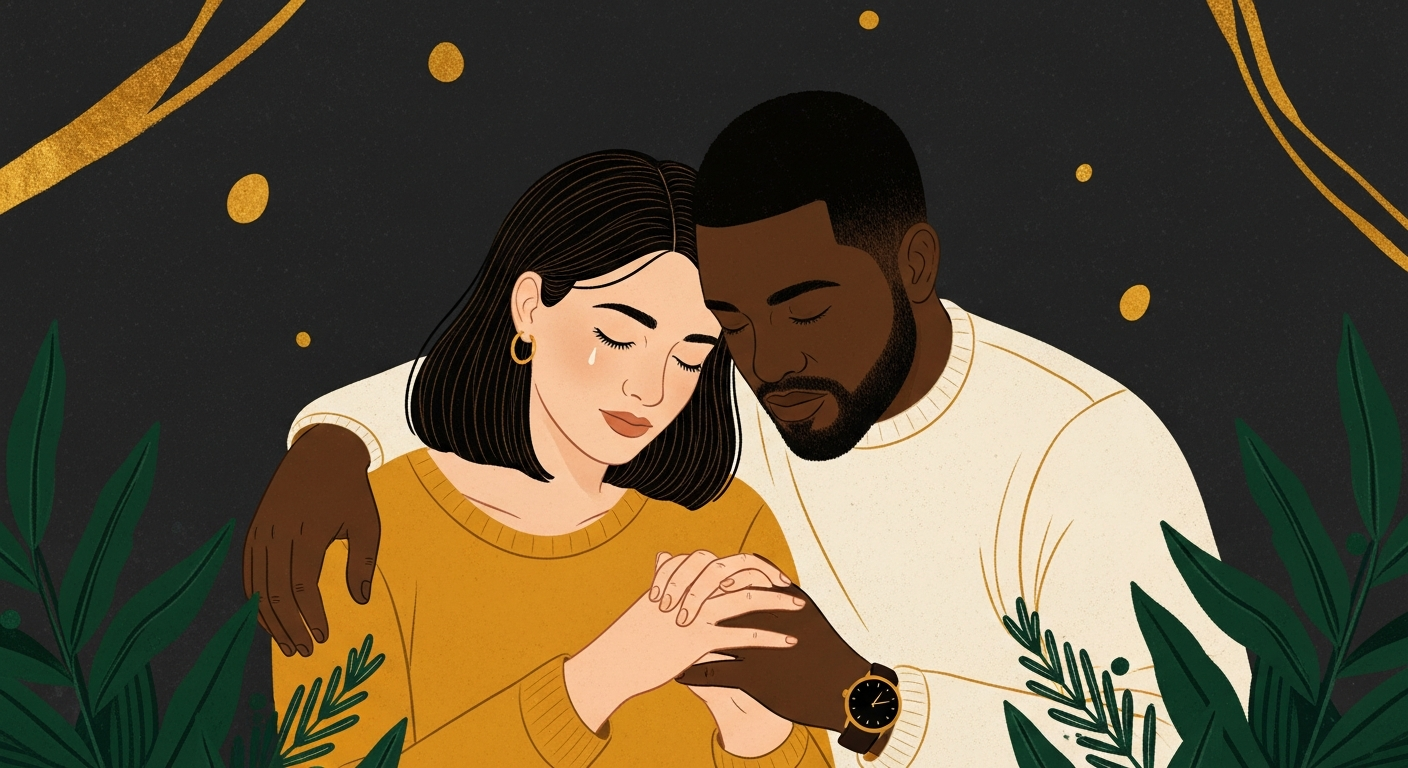
What it's really like being married to a gambling addict — the financial toll, emotional impact, and how to find support for yourself.
"Each conversation a brick — building back what I demolished" — Person By Person, 12&Well
Being married to someone struggling with compulsive gambling means living with hidden financial losses, broken trust, and constant uncertainty. It's not about bad luck or poor choices — it's a recognized addiction that reshapes every corner of a marriage. And if you're living it, you deserve support that's actually built for what you're going through.
You're Not Imagining It — This Is Real
There's a moment most spouses describe, and it sounds almost identical every time. You find a bank statement that doesn't add up. Or a credit card bill for an account you didn't know existed. Or you notice cash withdrawals — small at first, then not small at all — and a story that keeps shifting to explain them away.
You start doubting yourself before you doubt them.
That's not a coincidence. Compulsive gambling thrives in secrecy, and the person you love may have spent months or years building an architecture of concealment around their behavior. According to the National Council on Problem Gambling (NCPG), an estimated 5.8 million American adults meet criteria for a gambling problem in any given year — and for every one of them, an average of 6 to 10 additional people are significantly affected, most of them family members.
You are one of those people. And what you're feeling — the confusion, the anger, the grief for a life that looks nothing like what you planned — is not weakness. It's a completely rational response to an irrational situation.
The Financial Devastation No One Prepares You For
Let's talk about the money first, because that's usually where the earthquake hits hardest.
Compulsive gambling doesn't just drain a checking account. It can dismantle an entire family's financial foundation — retirement savings, children's college funds, home equity, credit scores. A study published in the Journal of Gambling Studies found that the average debt accumulated by someone with a gambling problem ranges from $40,000 to $70,000, and in severe cases can exceed six figures.
What makes this uniquely painful for spouses is the discovery timeline. You often learn about the damage long after it's been done. You may find out about a second mortgage when you try to refinance. Or discover maxed-out credit cards in your name that you never applied for. The financial betrayal can feel as devastating as any other kind of infidelity — sometimes more so, because it threatens your home, your children's stability, your future.
If you're in this place right now, the 12&Well Financial Clarity tool lets you get an honest picture of where things stand in about ten minutes. You can connect your bank or enter numbers manually — no account required, completely private. It won't fix everything overnight, but clarity is the first step toward regaining control. And you can use what you see there when working with a financial counselor, a sponsor, or just yourself.
What You Can Do Right Now About Finances
- Separate your accounts if they aren't already. This isn't punitive — it's protective.
- Pull your credit reports at annualcreditreport.com. Know what's in your name.
- Don't take on new joint debt until there's real, sustained recovery.
- Consider consulting a financial counselor who understands addiction — they exist, and they won't judge you.
The Emotional Toll — Betrayal, Hypervigilance, and Grief
The financial damage is quantifiable. The emotional damage is harder to measure, but it runs deeper.
Research from the International Gambling Studies journal has documented that spouses of people with gambling problems experience elevated rates of depression, anxiety, sleep disruption, and even symptoms consistent with PTSD. You may find yourself checking bank accounts compulsively, monitoring your partner's phone, or lying awake running mental calculations of what's missing.
This isn't paranoia. It's hypervigilance — your nervous system responding to a real threat that's been proven to you over and over.
And beneath the vigilance, there's grief. Grief for the partnership you thought you had. Grief for the plans that got derailed. Grief for the version of your spouse you fell in love with, who sometimes feels unreachable behind the addiction.
You may also feel an intense loneliness that's hard to explain to anyone who hasn't been through it. Friends and family might not understand why you don't "just leave." Or they minimize it — "at least it's not drugs." The NCPG reports that gambling addiction remains one of the most stigmatized and least-understood addictions, which means the people around you may genuinely not grasp the severity of what you're living with.
That isolation is one of the reasons peer support matters so much. Gam-Anon meetings — the companion program to Gamblers Anonymous — exist specifically for people in your position. They're not therapy, and they're not for your spouse. They're for you. And hearing someone else describe the exact spiral you've been living in can crack open a kind of relief you didn't know was possible.
If meetings aren't your thing — or aren't accessible where you are — 12&Well's community features include supporter peer matching, where you can connect with someone who genuinely understands what it's like to love someone in the grip of this addiction.
The Question You Keep Asking — Should I Stay or Should I Go?
Nobody can answer this for you. And anyone who tries — in either direction — is oversimplifying something that's deeply complex.
What matters more than the stay-or-go question is whether you're making the choice from a grounded place or a reactive one. Many spouses oscillate between "I'm done" and "maybe it'll get better" on a daily basis, and both impulses are valid. But decisions made in crisis rarely serve you well.
Here's what helps: focusing on what you can control.
You can't control whether your spouse stops gambling. You can't force them into recovery. You can't love them into healing — that's one of the hardest truths in this whole mess. But you can set boundaries that protect you and your children. You can get your own support. You can start your own recovery, because living with compulsive gambling changes you too, and those changes deserve attention.
Boundaries That Protect Without Punishing
Setting boundaries isn't about ultimatums or power plays. It's about defining what you will and won't accept — and following through.
- Financial boundaries: Separate accounts, limited access to shared funds, requiring transparency as a condition of the relationship continuing.
- Honesty boundaries: Stating clearly that you need truth, even when it's ugly, and that continued deception has specific consequences.
- Emotional boundaries: Refusing to be the person who monitors, polices, or manages their recovery. That's their work.
- Self-care boundaries: Protecting your own therapy appointments, your own meetings, your own time — even when crisis beckons.
The Am I Enabling? assessment on 12&Well can help you see patterns you might be too close to recognize. It's free, takes a few minutes, and gives you personalized results. Sometimes seeing it laid out clearly is the nudge you need.
When They Enter Recovery — What Changes and What Doesn't
If your spouse begins recovery — whether through GA, therapy, SMART Recovery, or a combination — you might expect relief. And some comes. But recovery often surfaces a new set of challenges that nobody warns you about.
The early days of recovery can feel like a second earthquake. The full extent of the financial damage may come to light. Your spouse may be emotionally raw and volatile as they confront what they've done. You may feel pressure to forgive before you're ready — from them, from well-meaning family members, from the culture of recovery itself.
Here's the truth: their recovery is not your recovery.
You need your own path. Gam-Anon, individual therapy, digital tools like Hope AI — which is available 24/7 and designed for both people in recovery and their supporters — or simply a space where you can be honest about what you're feeling without managing someone else's emotions.
The lyric from 12&Well's "Person By Person" captures something real about rebuilding — each conversation a brick. But those bricks take time. And you get to decide the pace at which trust is reconstructed. Nobody else sets that timeline.
What About the Kids?
If you have children, you're carrying an additional weight that deserves its own acknowledgment.
The NCPG estimates that 1.6 million children in the United States are significantly affected by a parent's gambling problem. Kids absorb more than we think — the tension, the whispered arguments, the financial instability, the emotional absence of a parent consumed by addiction.
You don't have to explain everything. But age-appropriate honesty matters. Kids who grow up in homes with unaddressed addiction are at higher risk for developing their own addictive behaviors later. Breaking the silence — even gently — helps break that cycle.
And protecting them financially is protecting them emotionally. If their college fund has been compromised, if the household is in crisis, stabilizing what you can provides a foundation they need even if they don't fully understand why.
You Deserve Recovery Too
This might be the most important thing in this entire article: you are not a supporting character in someone else's addiction story. You are a whole person who has been profoundly affected, and you deserve dedicated support — not as a function of their recovery, but as your own right.
Gam-Anon meetings are one powerful path. Individual therapy with someone who understands addiction dynamics is another. 12&Well was built with you in mind — from Hope AI's supporter-specific conversations to the Enabling Assessment to the Browser Shield you can install on shared family devices to block 264,000+ gambling sites.
If you need to talk to someone right now, the National Problem Gambling Helpline is available 24/7 at 1-800-522-4700. It's free, confidential, and staffed by people who understand exactly what you're going through.
Recovery — yours and theirs — is possible. It doesn't require perfection, and it doesn't follow a straight line. But it starts with one honest conversation, one boundary held, one moment of choosing yourself.
One brick at a time.
Frequently Asked Questions
How do I know if my spouse has a gambling problem?
Warning signs include unexplained financial losses, secrecy around money or devices, mood swings tied to wins and losses, borrowing money frequently, and becoming defensive when asked about spending. The NCPG notes that compulsive gambling often escalates gradually, making it difficult to identify early. If you're seeing a pattern — even if individual incidents seem small — trust your instinct and seek information from resources like Gam-Anon or the 1-800-522-4700 helpline.
Can a marriage survive gambling addiction?
Yes — many marriages do survive and even grow stronger through recovery, but it requires sustained effort from both partners. The person gambling needs their own recovery path — whether that's GA, therapy, or another program — and the spouse needs independent support too. Rebuilding trust takes time, transparency, and often professional guidance. Recovery isn't guaranteed, but the absence of honest effort is usually a clearer signal than the addiction itself.
How do I protect myself financially from a gambling spouse?
Start by separating bank accounts and removing your spouse's access to shared credit lines where possible. Pull your credit reports to identify any accounts opened in your name without your knowledge. Consult with a financial counselor or attorney who understands addiction-related financial damage. 12&Well's free Financial Clarity tool can help you get an honest snapshot of income, debts, and priorities in about ten minutes — no account required.
Where can I find support as the spouse of someone with a gambling problem?
Gam-Anon — the companion fellowship to Gamblers Anonymous — offers meetings specifically for family members affected by someone else's gambling. You can also call the National Problem Gambling Helpline at 1-800-522-4700 for confidential support 24/7. Online options include 12&Well's supporter community and Hope AI, which offers 24/7 conversations designed specifically for people in your situation. Individual therapy with an addiction-informed counselor is another powerful option.
This content is for informational purposes only and is not a substitute for professional medical advice, diagnosis, or treatment.
12&Well Editorial Team — Written by people in recovery, for people in recovery. Our team includes GA members, Gam-Anon members, and recovery advocates. We never accept funding from the gambling industry. If you need help right now, call 1-800-522-4700 (24/7).
recovery doesn't happen alone.
Join the waitlist for 12&Well — 24/7 AI support, geo protection, recovery music, and tools for the whole family.
Join the Waitlist