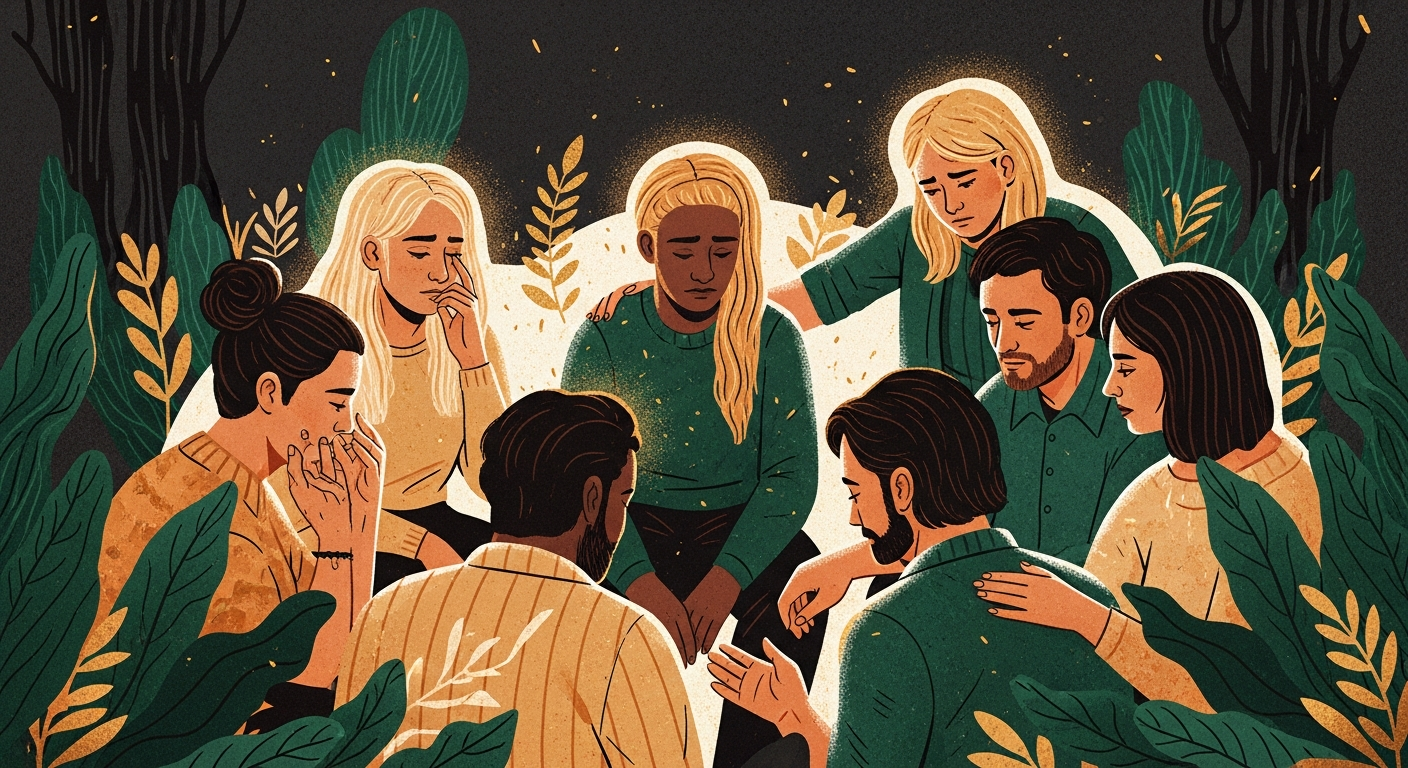
Shame keeps people trapped in gambling addiction. Learn how the shame cycle works, why stigma blocks recovery, and how to break free — starting today.
"I kept thinking if people knew the real me, they'd never look at me the same." — from "Where I Disappeared," The Rooms We Lived In Vol. 1
Shame is one of the most powerful forces keeping people trapped in compulsive gambling — and one of the least talked about. It's the voice that tells you you're broken, that you don't deserve help, that what you've done is too far gone to fix. Unlike guilt, which says I did something bad, shame says I am bad. And that difference matters. Shame doesn't motivate change. It fuels secrecy, isolation, and — more often than not — more gambling.
If you've ever hidden a bank statement, lied about where you were, or sat in your car unable to walk inside because you couldn't face your family — you already know what shame feels like. You just might not have had a name for it.
This article is about understanding shame's role in gambling addiction, why it keeps you stuck, and how to start loosening its grip — whether you're the one gambling or the one living with the fallout.
Why Shame and Gambling Addiction Are So Deeply Connected
Gambling addiction thrives in silence. And shame is what keeps you silent.
Research from the National Council on Problem Gambling (NCPG) shows that only about 10% of people with a gambling problem ever seek help. Compare that to alcohol or substance use disorders, where treatment-seeking rates are significantly higher. The gap isn't because gambling is less destructive — it's because the stigma surrounding it is uniquely isolating.
There are a few reasons shame hits harder with gambling:
- It's invisible. There's no physical evidence the way there might be with other addictions. You can lose everything and still look "fine" on the outside. That invisibility makes it easier to hide — and harder to ask for help.
- Money is moral in our culture. Losing money — especially large amounts — carries a specific kind of shame. Society ties financial responsibility to character. When you've gambled away savings, retirement funds, or your child's college money, the shame isn't just emotional. It feels existential.
- Gambling is marketed as entertainment. When everyone around you treats it as fun and harmless, admitting you can't control it feels like admitting you're fundamentally different. Weaker. Broken. None of which is true — but shame doesn't deal in truth.
- The lies compound. Compulsive gambling almost always involves deception. And every lie adds another layer of shame. Not just for the gambling itself, but for who you've become in order to keep gambling.
A 2019 study published in the Journal of Gambling Studies found that shame was a stronger predictor of problem gambling severity than depression or anxiety alone (Donati et al., 2019). That's not a minor finding. It means shame isn't just a side effect of gambling addiction — it's a driver of it.
The Shame Cycle: How It Keeps You Gambling
Here's what makes shame so dangerous: it creates a loop that feeds itself.
You gamble. You lose. You feel shame. The shame becomes unbearable. You need relief. The only relief you know — the only thing that temporarily silences that voice — is more gambling. The dopamine hit doesn't just numb the financial pain. It numbs the shame.
Until it doesn't. And then the shame is worse.
This is the shame cycle, and it's one of the most common patterns in compulsive gambling:
Gambling → Loss → Shame → Isolation → Emotional Pain → Gambling to Escape → Deeper Shame
The cycle is vicious because shame pushes you away from the very things that could help. It tells you that you don't deserve a meeting. That a therapist will judge you. That your family has already given up. That calling a helpline is for people with "real" problems.
Every single one of those thoughts is shame talking. Not reality.
How Shame Differs From Guilt in Recovery
This distinction matters more than you might think.
Guilt is tied to behavior: I did something harmful. It can actually be productive. Guilt can motivate you to make amends, to change course, to get honest.
Shame is tied to identity: I am someone harmful. It doesn't motivate change — it paralyzes. Research by Dr. Brené Brown, one of the leading researchers on shame and vulnerability, consistently shows that shame is correlated with addiction, depression, and aggression, while guilt is inversely correlated with those outcomes (Brown, 2012).
In the rooms, you'll sometimes hear people talk about the difference between "I have a gambling problem" and "I am a gambling problem." That's the guilt-shame line. Recovery starts when you can separate what you've done from who you are.
How Stigma Makes Everything Harder
Shame lives inside you. Stigma is shame's external reinforcement — the judgment, misunderstanding, and dismissal that comes from the world around you.
According to the Substance Abuse and Mental Health Services Administration (SAMHSA), stigma is one of the top barriers to treatment for all behavioral health conditions. For gambling specifically, the stigma is compounded by widespread misunderstanding. Many people — including some healthcare providers — still don't recognize compulsive gambling as a real addiction.
A 2020 survey by the NCPG found that nearly 40% of Americans believe gambling problems are a result of "lack of willpower" rather than a clinical condition. That belief system doesn't just exist in the general public. It shows up in families, workplaces, faith communities, and even in the mirror.
Stigma from family and loved ones
If you're supporting someone with a gambling addiction, you already know the complicated emotions involved — betrayal, anger, exhaustion, fear. Those feelings are valid. But stigma can show up in how those feelings get expressed.
Statements like "How could you be so stupid?" or "Just stop" or "You chose this" — even when spoken from genuine pain — reinforce the shame that keeps your loved one hiding. It doesn't mean you shouldn't have boundaries. It doesn't mean you should minimize the harm. It means the how of those conversations matters enormously.
Gam-Anon exists specifically for this reason. It gives supporters a space to process their own pain without inadvertently deepening the shame cycle for the person gambling. If you've never been, it's worth exploring — even once. You can find meetings at gam-anon.org.
Stigma in healthcare and public systems
Most therapists receive little to no training in gambling-specific addiction. A study in the International Journal of Mental Health and Addiction found that many clinicians lacked confidence in screening for or treating gambling disorders (Crawley et al., 2022). This means even when someone works up the courage to ask for help, they may encounter a provider who doesn't fully understand what they're dealing with.
This is one reason platforms like 12&Well exist. Not to replace therapy or the rooms — but to fill the gaps. Hope AI is available 24/7, trained in gambling-specific recovery, and doesn't judge. The free tools don't require a signup, a diagnosis, or an explanation. You can start exploring recovery on your own terms, at your own pace.
How to Start Breaking Free From Shame
Shame loses its power when it's spoken. That's not a platitude — it's a well-documented psychological reality. Dr. Brown's research consistently shows that shame cannot survive being shared with someone who responds with empathy.
Here's what that can look like in practice:
1. Tell one person the truth
This is the hardest step and the most important one. It doesn't have to be everyone. It doesn't have to be dramatic. It can be a sponsor, a therapist, a GA meeting, or even an AI companion like Hope at 3 a.m. when you can't sleep.
The point isn't confession for confession's sake. It's breaking the isolation that shame depends on.
2. Separate your actions from your identity
You are not your worst moment. You are not the total of your losses. You are a person who developed a compulsive behavior in response to real emotional needs — and you can develop new responses.
This is part of what the 12 steps address. Steps 4 and 5 — the moral inventory and sharing it with another person — are essentially a structured shame-reduction process. They ask you to look honestly at what you've done, but within a framework that separates behavior from identity.
If the 12 steps aren't your path, SMART Recovery offers a science-based alternative with tools for managing thoughts and emotions. Cognitive behavioral therapy (CBT) is also highly effective for addressing shame-based thinking patterns.
3. Get honest about finances — gently
Financial shame is often the deepest layer. The numbers feel unsurvivable. But you can't address what you won't look at.
12&Well's Financial Clarity tool was built for exactly this moment. You can connect your bank through Plaid or enter numbers manually, and in about 10 minutes, you'll have a clear picture of income, debts, and creditor priorities. No account required. No judgment. Just clarity — which is the opposite of shame.
4. Protect yourself during vulnerable moments
Shame spikes during high-risk windows — paydays, big sporting events, holidays when loneliness hits. The Gambling Radar maps these trigger windows across the full year and can send you 48-hour advance alerts via email, SMS, or push notification.
And if you're in the middle of an urge right now, the Urge Surfing Tool can walk you through a guided grounding exercise. It's free. It works on your phone. It doesn't require you to explain anything to anyone.
5. Let music reach what words can't
Sometimes shame lives below language. It sits in your chest, not your head. The 12&Well music catalog — 43 original songs across 4 albums — was written from lived experience for moments exactly like these. Songs like "Where I Disappeared" and "The Rooms We Lived In" put words to feelings that shame has kept locked away. Listen on Spotify.
What Supporters Can Do About Shame
If you love someone struggling with compulsive gambling, you have more influence over the shame dynamic than you might realize.
- Lead with concern, not accusation. "I'm worried about you" lands differently than "You're ruining us."
- Educate yourself. Understanding that gambling addiction is a brain-based condition — not a character flaw — changes how you show up. The Am I Enabling? Assessment can help you honestly evaluate your own patterns.
- Get your own support. You deserve a space to process this that isn't dependent on your loved one's recovery. Gam-Anon, therapy, or 12&Well's supporter community can give you that.
- Don't weaponize their shame. Even when you're furious — especially when you're furious — using someone's addiction against them pushes them deeper into hiding. It doesn't protect you. It protects the addiction.
According to the NCPG, for every person with a gambling problem, an estimated 6 to 10 additional people are directly affected. You're not alone in this. And your recovery matters just as much.
Recovery Is Where Shame Goes to Lose
Here's the truth no one tells you when you're deep in it: shame feels permanent, but it isn't.
Every person who has walked into a GA meeting, called the helpline, opened a recovery app, or simply told one person the truth — every single one of them was carrying shame when they did it. They didn't wait for the shame to go away first. They moved through it.
Recovery doesn't ask you to be shameless. It asks you to be honest. And honesty, it turns out, is shame's only real weakness.
If you're not ready for a meeting, that's okay. If you're not ready to tell anyone in your life, that's okay too. You can start right now, right here, with no one watching.
- Download the 12&Well Browser Shield to block gambling sites across 264,000+ domains.
- Try the Recovery Day Counter and mark today as day one — even if no one else knows.
- Talk to Hope AI at any hour. It remembers your story. It doesn't judge.
And if you need to talk to a real person right now, the National Problem Gambling Helpline is available 24/7: 1-800-522-4700. Call or text. It's free. It's confidential. And the person on the other end gets it.
You're not your shame. You never were.
Frequently Asked Questions
Why do people with gambling addiction feel so much shame?
Gambling addiction creates a unique combination of financial loss, deception, and cultural misunderstanding that amplifies shame. Because gambling is widely marketed as entertainment, admitting you can't control it feels like a personal failure rather than a recognized addiction. The secrecy required to maintain compulsive gambling adds layers of shame about the lies themselves — not just the gambling. Research shows shame is actually a stronger predictor of gambling severity than depression or anxiety (Donati et al., Journal of Gambling Studies, 2019).
How does stigma prevent people from seeking help for gambling?
Stigma creates both external and internal barriers. Externally, nearly 40% of Americans attribute gambling problems to lack of willpower rather than a clinical condition (NCPG, 2020), which means people fear judgment from family, friends, and even healthcare providers. Internally, that stigma becomes internalized shame — the belief that needing help means you're broken. Only about 10% of people with gambling problems ever seek treatment, and stigma is consistently identified as a primary reason (NCPG).
Can shame actually make gambling addiction worse?
Yes. Shame fuels a self-reinforcing cycle: gambling leads to loss, loss triggers shame, shame creates emotional pain, and gambling becomes the escape from that pain — which creates more shame. Unlike guilt, which can motivate behavioral change, shame attacks your sense of self and leads to isolation, secrecy, and avoidance of help. Breaking this cycle typically requires sharing your experience with someone who responds with empathy — whether that's in a GA meeting, with a therapist, through a recovery platform like 12&Well, or by calling 1-800-522-4700.
How can family members help reduce shame for someone with a gambling problem?
Family members can lead with concern rather than accusation, educate themselves about compulsive gambling as a brain-based condition, and avoid weaponizing their loved one's addiction during conflicts. Getting their own support through Gam-Anon or a supporter community is essential — both for their own wellbeing and because it models that seeking help is normal, not shameful. Setting boundaries is important, but how those boundaries are communicated directly impacts whether the person in recovery moves toward help or deeper into hiding.
This content is for informational purposes only and is not a substitute for professional medical advice, diagnosis, or treatment.
12&Well Editorial Team — Written by people in recovery, for people in recovery. Our team includes GA members, Gam-Anon members, and recovery advocates. We never accept funding from the gambling industry. If you need help right now, call 1-800-522-4700 (24/7).
recovery doesn't happen alone.
Join the waitlist for 12&Well — 24/7 AI support, geo protection, recovery music, and tools for the whole family.
Join the Waitlist