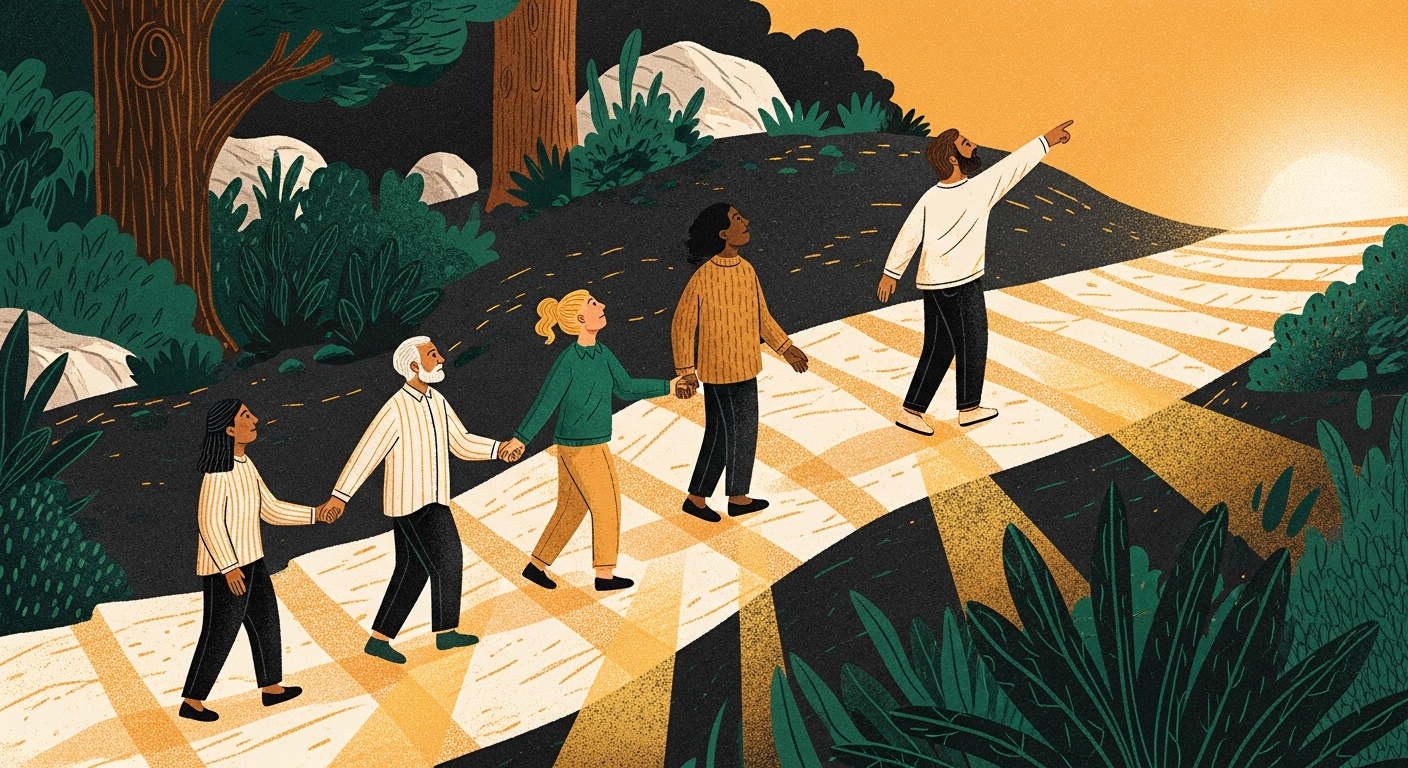
Step 2 of Gamblers Anonymous is about coming to believe recovery is possible. Learn what "a power greater than ourselves" really means — no religion required.
"I've been gripping so long my hands are shaped like wheels" — Slide Over, 12&Well
Step 2 of Gamblers Anonymous asks you to believe that a power greater than yourself can restore you to a normal way of thinking and living. It's not about religion. It's about loosening the grip — on control, on isolation, on the belief that you can fix this alone. It's the moment recovery shifts from surrender to hope.
If Step 1 was about honesty — admitting you were powerless over gambling — then Step 2 is about openness. And for a lot of people, it's the harder of the two.
What Step 2 Actually Says
The exact language of GA's Step 2 reads:
"Came to believe that a Power greater than ourselves could restore us to a normal way of thinking and living."
Three phrases matter here. Came to believe — meaning this is a process, not a light switch. A Power greater than ourselves — meaning something beyond your own willpower. And restore us to a normal way of thinking and living — meaning the goal isn't perfection. It's normalcy. Clarity. The ability to think straight without the compulsion running the show.
That distinction matters because compulsive gambling rewires how your brain processes decisions. Research from the American Psychiatric Association shows that gambling addiction activates the same reward circuits as substance use disorders, fundamentally altering dopamine pathways and impulse control (APA, DSM-5-TR, 2022). Step 2 is acknowledging that the damage goes deeper than bad choices — and that healing requires something you can't manufacture on your own.
Why Step 2 Feels So Hard
Let's be honest. For many people walking into the rooms, "coming to believe" sounds like code for "find God." And if your experience with religion has been complicated — or nonexistent — that can feel like a wall.
You're not alone in that resistance. Studies from the National Council on Problem Gambling indicate that perceived religious requirements are one of the top barriers preventing people from engaging with 12-step programs (NCPG, 2023 National Survey). It's a real obstacle, and GA members talk about it openly.
But here's what people who've worked this step will tell you: Step 2 isn't asking you to adopt someone else's faith. It's asking you to consider — just consider — that your own best thinking got you here. That the voice in your head that said one more bet, then I'll stop was not a reliable guide. And that maybe, just maybe, there's a source of strength outside your own skull that could help.
That "power greater than yourself" can be the GA fellowship itself. It can be the collective wisdom of a room full of people who've lived what you've lived. It can be the structure of the program. It can be nature, the universe, love, or something you can't even name yet.
The only requirement is willingness.
The Difference Between Believing and Understanding
One of the most freeing things about Step 2 is a phrase old-timers in the rooms use: "came to believe" — not "figured it all out."
You don't need to understand your higher power. You don't need a theology degree. You don't need to resolve every question about faith before you move forward. You just need a crack in the door. A small willingness to stop relying exclusively on the same thinking patterns that fed your compulsion.
Think of it this way. When you were gambling, you believed — with total certainty — in things that weren't true. You believed the next bet would fix everything. You believed you could control it. You believed you were the exception.
Step 2 is asking you to redirect that capacity for belief toward something that actually works.
What "Restore Us to a Normal Way of Thinking" Means
This phrase trips people up. "Normal" can sound dismissive — like the goal is to pretend nothing happened. But in GA's context, "normal way of thinking" means something specific: thinking that isn't hijacked by the compulsion.
It means waking up and not immediately calculating how to get money to gamble. It means being able to watch a game without your pulse spiking. It means making a financial decision based on reality, not desperation.
Research published in Addictive Behaviors found that individuals with gambling disorder show significantly impaired decision-making in tasks involving risk and reward — and that these cognitive distortions measurably improve during sustained recovery (Clark et al., Addictive Behaviors, 2019). Your brain can heal. But it doesn't heal through willpower alone — it heals through supported recovery, whatever form that takes.
That lyric from 12&Well's Slide Over captures something real about this stage: when you've been gripping so long that your hands have taken the shape of the thing you can't let go of, the restoration isn't just behavioral. It's physical. Neurological. It's learning to unclench.
How People Actually Work Step 2
There's no single right way. But here's what tends to happen in practice.
Talk to People in the Rooms
The most common way people "come to believe" is by watching it work in someone else's life. You sit in a GA meeting. You hear someone share who was exactly where you were — same debts, same lies, same desperation — and they're different now. Not perfect. But free.
That's evidence. And evidence builds belief.
According to a meta-analysis published by SAMHSA, peer support in recovery settings — including 12-step fellowships — is associated with reduced relapse rates and improved quality of life outcomes (SAMHSA, Evidence-Based Practices Resource Center, 2020). When you hear someone say "the program works if you work it," that's not a slogan. It's a data point.
Start Small
You don't have to believe everything at once. Some people start with: I believe this meeting helps me more than isolating. That's enough. Others start with: I believe my sponsor understands something I don't. That counts too.
Step 2 is progressive. The belief deepens as you keep showing up.
Use Every Tool Available
GA meetings are one powerful path — but they're not the only one. Some people find their footing through therapy, SMART Recovery, or digital tools that meet them where they are at 2 a.m. when the urge hits and no meeting is available.
That's part of why 12&Well exists. Hope AI — the platform's 24/7 companion — can walk you through Step 2 reflection at any hour, on any day, with memory of where you've been in your journey. The Urge Surfing Tool at 12andwell.com/tools/urge-timer offers guided grounding exercises for the moments when belief feels impossibly thin. And the community features provide connection to people who get it — sponsors, peers, supporters — without waiting for the next meeting night.
Recovery doesn't have to fit a single mold. The point is to find your version of "a power greater than yourself" — and to let it in.
Step 2 for Supporters and Family
If someone you love is working Step 2, you might feel impatient. You might think: just believe already. Or you might feel frustrated that they're talking about a higher power when what you need is the money back, the trust rebuilt, the truth told.
That's valid. Your pain is real.
But here's what helps to know: Step 2 is often the moment when the person in recovery starts to shift from "I'll handle this myself" to "I need help." That shift — however small it looks from the outside — is enormous. It's the foundation for everything that follows.
Gam-Anon, the fellowship for family members of compulsive gamblers, has its own version of this step. It asks supporters to find their own source of strength beyond the chaos of someone else's addiction. If you haven't explored Gam-Anon, it's worth a look — you can find meetings at gam-anon.org.
12&Well's Enabling Assessment tool at 12andwell.com/tools/enabling-assessment can also help you honestly evaluate your own patterns — not to blame you, but to give you clarity. Because your recovery matters just as much.
What Comes After Step 2
Step 2 doesn't resolve everything. It opens a door. Step 3 will ask you to walk through it — to make a decision to turn your will and your life over to the care of your higher power, however you define it.
But you don't need to think about Step 3 right now. If you're sitting with Step 2 and it feels uncomfortable, confusing, or even a little hopeful — you're in exactly the right place.
The belief doesn't have to be big. It just has to be yours.
Getting Started — Right Now
If you're reading this and something resonates, here's what you can do today:
- Go to a meeting. Find a GA meeting near you at gamblersanonymous.org/ga/locations. You don't need to say a word. Just listen.
- Talk to someone who gets it. Hope AI is available 24/7 at 12andwell.com — no appointment, no judgment, no waitlist.
- Call the helpline. The National Problem Gambling Helpline is free, confidential, and available around the clock: 1-800-522-4700.
- Block the noise. 12&Well's Browser Shield blocks 264,000+ gambling sites for free — one less thing to fight against while your belief is still building. Install it at the Chrome Web Store.
You don't have to have it all figured out. You just have to be willing to consider that something — some power, some community, some quiet voice beyond the compulsion — could help restore you to a way of living that makes sense again.
That's Step 2. And it's enough.
Frequently Asked Questions
What does Step 2 of Gamblers Anonymous mean?
Step 2 — "Came to believe that a Power greater than ourselves could restore us to a normal way of thinking and living" — is about openness. It asks you to acknowledge that your own thinking, under the influence of compulsive gambling, isn't enough to get you out. The "Power greater than yourself" is broadly defined — it can be God, the GA fellowship, the program's structure, or anything beyond your individual willpower.
Do you have to believe in God for Step 2?
No. GA does not require belief in any specific deity or religion. Many members define their higher power as the fellowship itself, the collective recovery wisdom in the rooms, the structure of the 12-step program, or something personal that doesn't have a name. The only requirement is willingness to look beyond yourself for help.
How is Step 2 different from Step 1 in GA?
Step 1 is about honesty — admitting you are powerless over gambling and that your life has become unmanageable. Step 2 is about hope — beginning to believe that recovery is actually possible through a source of strength beyond your own willpower. Step 1 identifies the problem. Step 2 opens the door to the solution.
What if I'm struggling with Step 2?
That's normal — and more common than you might think. Many GA members sit with Step 2 for weeks or months. Talk to your sponsor, share about it in meetings, or explore it on your own through journaling or reflection tools like 12&Well's Hope AI. Belief usually builds gradually through experience — watching the program work for others — rather than arriving all at once.
This content is for informational purposes only and is not a substitute for professional medical advice, diagnosis, or treatment. If you or someone you love is struggling with compulsive gambling, call the National Problem Gambling Helpline at 1-800-522-4700 — free, confidential, 24/7.
12&Well Editorial Team — Written by people in recovery, for people in recovery. Our team includes GA members, Gam-Anon members, and recovery advocates. We never accept funding from the gambling industry. If you need help right now, call 1-800-522-4700 (24/7).
recovery doesn't happen alone.
Join the waitlist for 12&Well — 24/7 AI support, geo protection, recovery music, and tools for the whole family.
Join the Waitlist