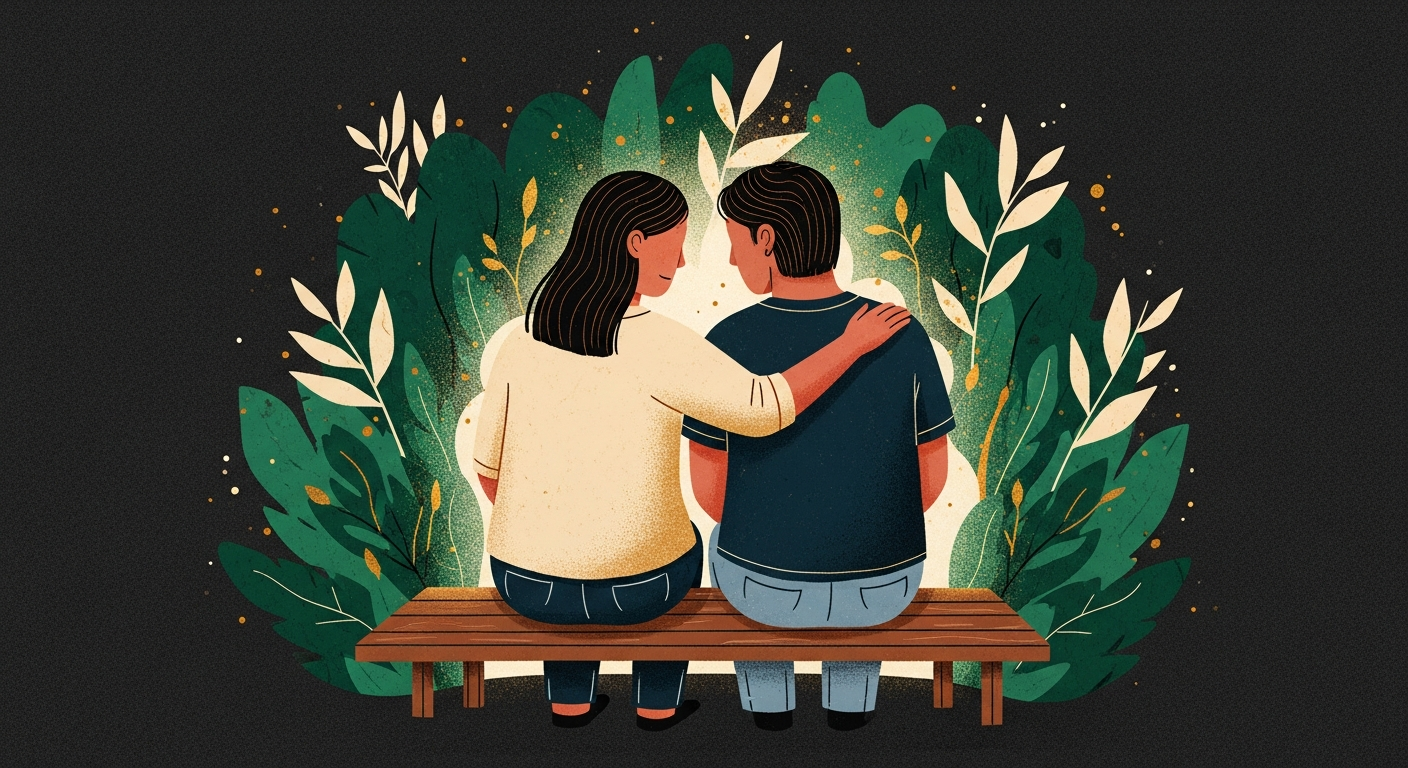
Rebuilding trust after gambling addiction takes honesty, transparency, and time. A guide for people in recovery and the families who love them.
"Every name upon this list is written on my heart" — Every Name, 12&Well
Rebuilding trust after gambling addiction is the slow, intentional process of restoring honesty, transparency, and emotional safety in relationships damaged by compulsive gambling. It requires consistent action over time — not promises, not apologies alone — and it involves both the person in recovery and the people who love them doing their own healing work.
If you're reading this, something already shifted. Maybe you're the one in recovery, wondering if the people you hurt will ever look at you the same way again. Maybe you're the spouse, the parent, the friend — trying to figure out if what you're being told is finally the truth.
Either way, you're in the right place. And the honest answer is this: trust can be rebuilt. But it won't happen on your timeline, and it won't look like going back to the way things were. It looks like building something new.
Why Gambling Addiction Destroys Trust Differently
Every addiction damages relationships. But compulsive gambling carries a particular kind of devastation because it's built on secrecy and financial deception.
There's often no substance to find, no physical evidence to stumble across. Instead, there are hidden bank accounts, missing savings, lies about where the money went, and a double life that can go undetected for months or years. Research from the National Council on Problem Gambling estimates that compulsive gambling affects not just the individual but an average of 8 to 10 additional people in their life — spouses, children, parents, coworkers, friends (NCPG, 2023).
The betrayal isn't just emotional. It's financial, practical, and deeply personal. Partners discover debts they didn't know existed. Parents learn their child borrowed money under false pretenses. Children grow up in homes where stress has no visible explanation.
A 2021 study published in the Journal of Gambling Studies found that partners of people with gambling problems reported levels of psychological distress comparable to partners of those with substance use disorders — with financial stress identified as the most significant unique stressor (Salonen et al., 2021).
That's why rebuilding trust after gambling isn't just about saying sorry. It's about dismantling an entire system of deception and replacing it — one transparent action at a time.
What Rebuilding Trust Actually Looks Like
It Starts with Full Disclosure
You cannot rebuild trust on a partial truth. If you're in recovery, this is one of the hardest parts — but it's non-negotiable. Your family needs to know the scope of what happened. The debts. The lies. The timeline.
This doesn't mean dumping every detail in a single overwhelming conversation. It means committing to complete honesty when asked, and volunteering information before you're caught.
In the rooms of Gamblers Anonymous, this process connects directly to Steps 4 and 5 — taking a fearless moral inventory and sharing it with another person. Many people in recovery find that working these steps with a sponsor gives them the structure to be honest in a way they couldn't manage alone.
If GA isn't your path, therapy — particularly with a counselor who specializes in gambling addiction — can provide a similar framework. What matters is that the honesty is complete and ongoing.
Transparency Becomes a Daily Practice
Trust isn't restored by one honest conversation. It's restored by hundreds of small, consistent actions.
That might look like:
- Giving your partner full access to bank accounts, credit cards, and financial statements
- Sharing your location during high-risk times without being asked
- Checking in daily — even when things are going well
- Showing up to your recovery commitments consistently, whether that's meetings, therapy, or digital check-ins through tools like Hope AI
- Installing protective tools like 12&Well's Browser Shield — not because someone told you to, but because you're building a life where gambling has no access point
These aren't punishments. They're the architecture of a new kind of relationship — one where openness isn't the exception. It's the foundation.
You Don't Get to Set the Timeline
This might be the hardest truth in recovery: you don't get to decide when someone trusts you again.
You might be six months clean and frustrated that your partner still checks your phone. You might be a year into recovery and hurt that your parents won't lend you money. That frustration is understandable. But the person you hurt gets to heal at their own pace.
The American Psychological Association notes that rebuilding trust after significant betrayal is a process that typically takes one to two years of consistent, trustworthy behavior — and in cases involving financial deception, it can take longer (APA, 2019).
Your job is to keep showing up. Not to prove anything in a single moment, but to let the evidence accumulate quietly over time.
For the Person in Recovery — What You Can Do Today
Work a Program That Keeps You Accountable
Whether it's GA, SMART Recovery, individual therapy, or a combination — the key is consistency. Recovery isn't something you did. It's something you do, every day.
If meetings aren't accessible or don't feel right for you yet, 12&Well's platform offers daily check-ins through Hope AI, community support, and self-guided tools that meet you wherever you are. The point isn't the specific path. The point is that you're on one.
Get Honest About Finances
Financial deception is often the deepest wound. Healing it requires radical transparency.
12&Well's Financial Clarity tool at /financial-clarity lets you map your full financial picture — income, debts, creditor priorities — in about 10 minutes. You can use it privately to prepare for a conversation with your partner, bring it to a meeting, or work through it with a sponsor. No account required, no judgment.
Getting honest about money isn't just a recovery step. It's an act of respect toward the people your gambling affected.
Make Amends — Not Just Apologies
There's a difference between saying "I'm sorry" and making amends. Apologies acknowledge what happened. Amends change the behavior.
In the 12-step framework, Steps 8 and 9 guide this process — making a list of people you've harmed and becoming willing to make it right, then doing so directly wherever possible. The song "Every Name" captures this weight — the idea that every person affected by your gambling is written on your heart, not as guilt, but as responsibility.
Making amends might mean repaying money over time. It might mean showing up for your kids in ways you didn't before. It might mean finally telling the truth to someone you've been lying to for years. The form varies. The commitment doesn't.
For the Supporter — Your Recovery Matters Too
You're Not the One Who Gambled, But You're Affected
If you love someone in recovery from compulsive gambling, you already know that their addiction changed you too. You became a detective. A financial watchdog. A person who checks bank statements at 2 a.m. and flinches when the phone rings.
Your healing isn't secondary. It's essential.
Gam-Anon — the fellowship for families and friends of compulsive gamblers — provides a space where supporters can process their own pain, set boundaries, and find people who truly understand. According to the NCPG, family members of people with gambling problems experience higher rates of depression, anxiety, and stress-related health conditions than the general population (NCPG, 2022).
You deserve support that's just for you.
Set Boundaries Without Guilt
Boundaries aren't punishment. They're protection — for you and for the person in recovery.
A boundary might sound like:
- "I need access to all financial accounts as a condition of staying in this relationship."
- "I'm not willing to co-sign loans or cover debts I didn't create."
- "I need you to attend your meetings consistently, and I need to see that happening."
- "I love you, and I also need space to process what happened before I can fully trust again."
12&Well's Enabling Assessment at /tools/enabling-assessment can help you identify patterns — where support becomes enabling, and where healthy boundaries need to exist. It's free, private, and takes just a few minutes.
Don't Rush Your Own Healing
Just as the person in recovery doesn't get to set your timeline for trust, you also don't need to forgive on someone else's schedule.
Forgiveness — if and when it comes — is for you. It's not a requirement. It's not a checkbox. It's something that might unfold gradually as you watch consistent change over months and years.
If you're struggling with whether to stay, whether to trust, or whether the changes are real — that's not weakness. That's wisdom earned through experience.
When Trust Feels Impossible
Some days, rebuilding trust feels like trying to glue together something that shattered into a thousand pieces. Both people in this process will have moments of doubt.
For the person in recovery: there may come a point where you've done everything right and your partner still isn't ready. That's painful. Sit with it. Keep going. Your recovery isn't contingent on their forgiveness — but their forgiveness often depends on your continued recovery.
For the supporter: there may come a point where you realize the trust isn't coming back, despite genuine effort on both sides. That's a valid conclusion too. Not every relationship survives addiction. Choosing yourself isn't failure.
If you're in crisis — either because gambling urges are overwhelming or because the weight of everything feels like too much — call the National Problem Gambling Helpline at 1-800-522-4700. It's free, confidential, and available 24/7. You can also reach out to Hope AI through the 12&Well app for immediate support any time, day or night.
The Long Road Is the Real Road
There are no shortcuts to trust. There's no single conversation, no grand gesture, no amount of clean time that flips a switch and makes everything okay.
But here's what recovery teaches — in the rooms, in therapy, in daily practice: small, consistent actions compound. Day after day of honesty. Week after week of showing up. Month after month of being the person you said you'd become.
That's how trust is rebuilt. Not in a moment. In a thousand moments, stacked on top of each other, until the person across from you finally exhales.
You're not going back to who you were before. You're becoming someone new — someone whose word means something again.
And that's worth every hard day on this road.
Frequently Asked Questions
How long does it take to rebuild trust after gambling addiction?
There's no fixed timeline, but research suggests that rebuilding trust after significant betrayal typically requires one to two years of consistent, trustworthy behavior (APA, 2019). In cases involving financial deception — which is central to compulsive gambling — it often takes longer. The key factors are full transparency, sustained recovery, and allowing the affected person to heal at their own pace.
Can a relationship survive gambling addiction?
Yes — many relationships do survive and even grow stronger after gambling addiction, but it requires genuine effort from both people. The person in recovery must commit to ongoing honesty, accountability, and working a program. The supporter must invest in their own healing, often through Gam-Anon, therapy, or support communities like 12&Well. Some relationships don't survive, and that outcome is valid too.
How do I know if my partner is still gambling?
Warning signs of continued or relapsed gambling include unexplained financial discrepancies, secretive phone or computer use, mood swings tied to no visible cause, and defensiveness around money conversations. Rather than becoming a detective, focus on establishing transparent financial systems — shared account access, accountability tools like 12&Well's Browser Shield, and regular honest check-ins. If you suspect relapse, bring it to your own support network first, whether that's Gam-Anon, a therapist, or a trusted friend.
What should I do if I'm in recovery and my family won't forgive me?
Keep working your program. Continue showing up with honesty and consistency every single day. Forgiveness isn't guaranteed and it isn't owed — but the changes you're making are still worth making, regardless of anyone else's response. Talk to your sponsor, your therapist, or reach out to Hope AI when the weight of it feels like too much. Your recovery belongs to you. And sometimes, time does what words cannot.
This content is for informational purposes only and is not a substitute for professional medical advice, diagnosis, or treatment. If you or someone you know is struggling with compulsive gambling, call the National Problem Gambling Helpline at 1-800-522-4700 (24/7) or explore recovery tools at 12andwell.com.
12&Well Editorial Team — Written by people in recovery, for people in recovery. Our team includes GA members, Gam-Anon members, and recovery advocates. We never accept funding from the gambling industry. If you need help right now, call 1-800-522-4700 (24/7).
recovery doesn't happen alone.
Join the waitlist for 12&Well — 24/7 AI support, geo protection, recovery music, and tools for the whole family.
Join the Waitlist