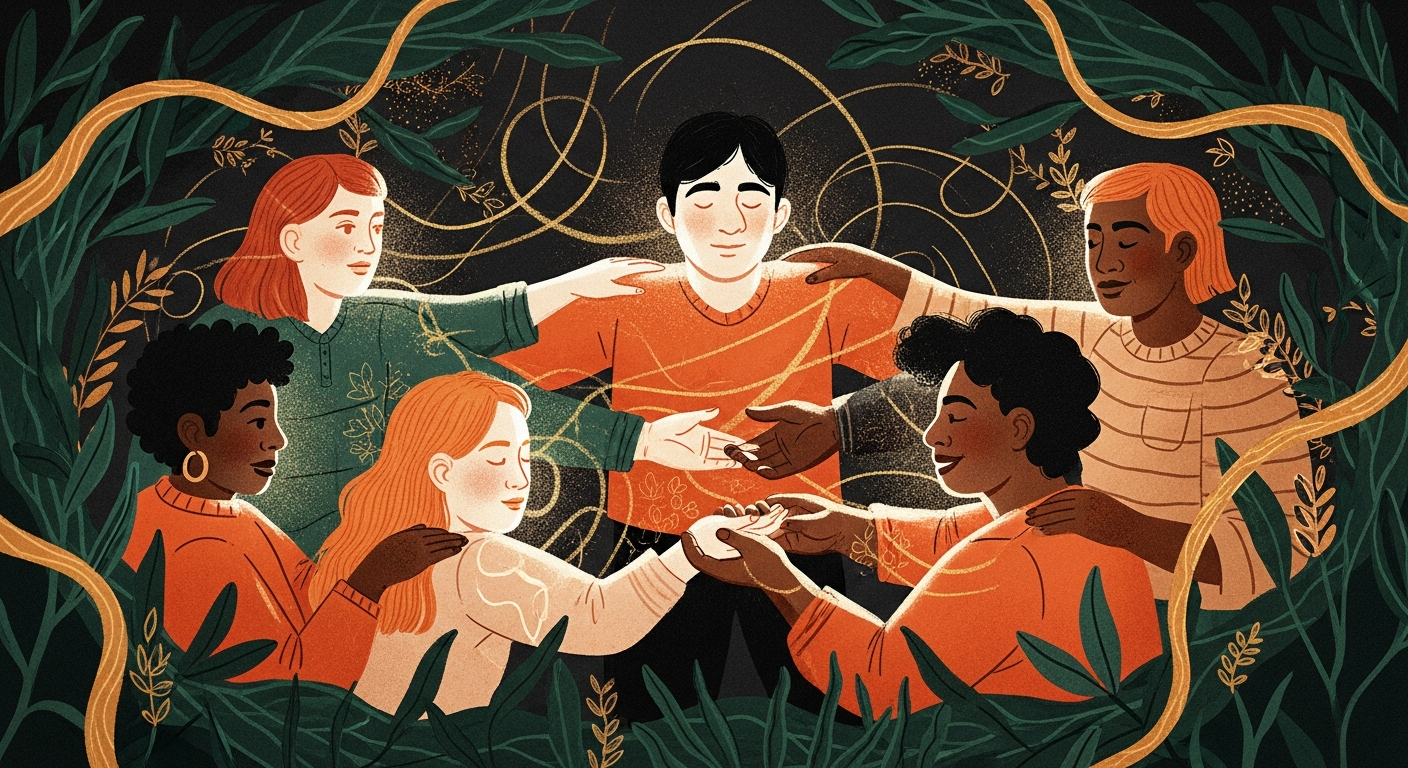
Gambling apps exploit your brain's dopamine system by design. Learn the science behind the addiction loop and find real tools for recovery.
"I'm home — in my personalized drain" — MY Lucky Machine, 12&Well
Gambling apps are engineered to hijack your brain's dopamine reward system — the same neural circuitry that drives survival instincts like eating and bonding. Through variable reward schedules, personalized notifications, and frictionless deposits, these apps create a compulsive feedback loop that mirrors the neuroscience of substance addiction, making it harder to stop with willpower alone.
If you've ever opened a gambling app "just to check" and looked up forty minutes later — heart racing, stomach tight — you already know something deeper is happening. That pull isn't a character flaw. It's neurochemistry. And the people who designed that app know exactly how it works.
Your Brain on Gambling Apps: The Dopamine Loop
Dopamine is a neurotransmitter your brain releases when it anticipates a reward — not just when it receives one. That distinction matters. Your brain doesn't light up most when you win. It lights up most when you might win.
This is called a variable ratio reinforcement schedule, and it's one of the most powerful conditioning tools in behavioral psychology. Slot machines have used it for decades. Gambling apps have perfected it.
Here's what happens in your brain when you place a bet on your phone:
- Anticipation — Your prefrontal cortex registers the possibility of reward. Dopamine surges.
- Near miss or small win — The app delivers just enough reinforcement to keep you engaged. Dopamine spikes again.
- Loss — Instead of discouraging you, the loss creates a "prediction error" that drives you to try again — your brain wants to correct the gap between expectation and outcome.
- Repeat — Each cycle strengthens the neural pathway, making the behavior more automatic and harder to interrupt.
Research published in Nature Reviews Neuroscience found that the dopamine pathways activated during gambling are nearly identical to those activated by addictive substances (Clark et al., 2019). Your brain literally cannot tell the difference between a betting app and a drug.
That lyric — "I'm home — in my personalized drain" — captures exactly what this feels like from the inside. The app becomes a familiar place. A refuge. And then a trap.
How Gambling Apps Are Designed to Keep You Playing
The gambling industry spent over $2.2 billion on advertising in the United States in 2023 alone (American Gaming Association). But the most powerful marketing isn't the commercial you see during a game. It's the design of the app already on your phone.
Push Notifications and Personalized Triggers
Gambling apps track your behavior — when you bet, how much, what draws you back after a break. They use that data to send perfectly timed push notifications. A message at 10 PM on a Friday isn't random. It's calculated based on your historical usage patterns.
These notifications exploit what neuroscientists call cue-induced craving. Your brain associates the notification sound or banner with the dopamine hit of gambling, triggering an urge before you've even made a conscious decision.
Frictionless Deposits, Painful Withdrawals
Depositing money into a gambling app takes seconds — stored payment methods, one-tap confirmation, no waiting period. Withdrawing winnings? That involves verification steps, processing delays, and sometimes minimum thresholds.
This asymmetry is intentional. The easier it is to put money in and the harder it is to take money out, the longer you stay in the loop.
The Illusion of Control
Many gambling apps incorporate features that make you feel like you're making skilled decisions — custom bet builders, statistical dashboards, "research" tools. This creates what psychologists call the illusion of control, a cognitive bias where you believe you can influence a random outcome.
A 2023 study in The Journal of Gambling Studies found that perceived control significantly increased betting frequency and risk tolerance, even when participants were shown that outcomes were entirely random (Griffiths & Auer, 2023).
Dark Patterns and Infinite Scroll
Borrowed from social media, gambling apps use autoplay features, "quick bet" options, and seamless transitions between events. There is no natural stopping point. The experience is designed to eliminate the moment of pause where you might ask yourself, do I actually want to keep doing this?
Who Is Most Vulnerable — and Why It's Not Who You Think
Compulsive gambling doesn't discriminate, but gambling apps have opened the door to demographics that traditional casinos rarely reached.
Young adults are disproportionately affected. The National Council on Problem Gambling (NCPG) reports that people aged 18–24 are more than twice as likely to develop a gambling problem than older adults. Sports betting apps, normalized through relentless advertising and social media culture, have made gambling feel like just another part of watching the game.
People with existing mental health challenges are at higher risk. SAMHSA data indicates that approximately 96% of people with gambling problems also meet criteria for another psychiatric condition — most commonly depression, anxiety, or substance use disorders (SAMHSA, 2023). Gambling apps offer what feels like an escape from emotional pain, and the dopamine hit temporarily masks what's underneath.
Supporters and families carry the weight too. If someone you love is caught in the cycle, you already know. The secrecy. The missing money. The look in their eyes when they say everything's fine. Organizations like Gam-Anon exist specifically for you — the person standing next to this, trying to figure out what to do. Your recovery matters just as much.
Why Willpower Alone Doesn't Work
If you've told yourself, I'll just delete the app — and then redownloaded it at 2 AM — you're not weak. You're fighting a neurological pattern that has been deliberately reinforced by a multi-billion dollar industry.
Compulsive gambling changes the structure and function of your brain's reward circuitry over time. Research from the American Psychiatric Association shows that prolonged gambling behavior reduces the brain's natural dopamine sensitivity, meaning you need more stimulation to feel the same level of engagement (APA, 2022). This is tolerance — the same phenomenon seen in substance addiction.
Recovery isn't about having more discipline. It's about having more support.
What Actually Helps: Paths Into Recovery
There isn't one right way to recover. There's the way that works for you, right now, today.
The Rooms
Gamblers Anonymous has been helping people find recovery since 1957. The 12-step framework gives you structure, fellowship, and a sponsor who has walked the same road. If you've never been to a meeting, the first one is the hardest — and often the most important. You can find a meeting near you at gamblersanonymous.org.
For family members and supporters, Gam-Anon offers meetings, literature, and a community of people who understand what you're going through.
Therapy and Professional Support
Cognitive Behavioral Therapy (CBT) has strong evidence for treating compulsive gambling — it helps you identify and interrupt the thought patterns that precede a bet. SMART Recovery offers a non-12-step, science-based alternative for those who prefer a different framework.
Digital Tools That Meet You Where You Are
Not everyone is ready for a meeting. Some people need help at 2 AM on a Tuesday when the urge hits and there's no one to call. That's why tools like 12&Well exist.
- Hope AI is a 24/7 AI companion built specifically for gambling recovery. It remembers your story, checks in daily, and walks through the 12-step journey at your pace — via text, voice, or SMS.
- Browser Shield is a free Chrome extension that blocks over 264,000 gambling domains. It won't stop every urge, but it removes the easiest path back in.
- Urge Surfing Tool at 12andwell.com/tools/urge-timer gives you a guided grounding exercise when cravings spike — no signup required.
- Financial Clarity at 12andwell.com/financial-clarity helps you get honest about where things stand financially — useful for a first meeting with a sponsor or just for yourself.
- Gambling Radar at 12andwell.com/gambling-radar forecasts high-risk trigger windows throughout the year — major sporting events, payday cycles, holiday isolation spikes — and sends you alerts 48 hours before each one.
Recovery doesn't require you to walk into a room before you're ready. It just requires one honest step. Any step.
For the Person Standing Next to This
If you're reading this because someone you love can't stop, this section is for you.
You didn't cause this. You can't control it. And you can't cure it. But you can take care of yourself — and that's not selfish. It's necessary.
The Am I Enabling? Assessment at 12andwell.com/tools/enabling-assessment is a free, private tool that helps you understand your own patterns. It takes five minutes and doesn't require a signup.
Gam-Anon meetings are available in person and online. You deserve a space where people understand the specific kind of exhaustion that comes from loving someone caught in this cycle.
And if the person you're worried about is a young adult — a child, a sibling, a friend — know that the shame they're carrying is enormous. Meeting them with honesty and boundaries — not anger and ultimatums — is the approach most likely to open a door.
The Bigger Picture: An Industry Built on Your Brain
The gambling industry generated $78 billion in revenue in the U.S. in recent years — while spending roughly 267 times more on advertising than on recovery funding (12&Well, The Toll tracker). That ratio tells you everything about where the priorities lie.
You can see the full scope of this at 12andwell.com/the-toll — a live dashboard tracking industry revenue against human cost, including helpline calls, affected children, and state-by-state data.
Understanding how the system works doesn't make recovery easy. But it does something important — it moves the blame off your shoulders and puts it where it belongs. You're not broken. You're responding exactly the way your brain was designed to respond to a product built to exploit that response.
One Step You Can Take Right Now
You don't have to figure all of this out today.
You could call the National Problem Gambling Helpline at 1-800-522-4700 — it's free, confidential, and available 24/7.
You could install the Browser Shield right now. It takes 30 seconds.
You could open the Urge Surfing Tool and just breathe for three minutes.
You could tell one person the truth.
Recovery doesn't start with a dramatic moment. It starts with the smallest honest thing you can do next.
Frequently Asked Questions
How do gambling apps affect dopamine levels in the brain?
Gambling apps trigger dopamine release during the anticipation of a reward — not just the reward itself. Variable outcomes, near misses, and personalized notifications create a reinforcement loop that strengthens over time, reducing your brain's baseline dopamine sensitivity and requiring increasing stimulation to feel engaged. This mirrors the tolerance patterns seen in substance addiction (Clark et al., Nature Reviews Neuroscience, 2019).
Are gambling apps more addictive than casino gambling?
Research suggests yes — the 24/7 accessibility, frictionless deposits, push notifications, and personalized design of gambling apps remove the natural barriers that physical casinos have, like travel time and closing hours. A study in The Journal of Behavioral Addictions found that online gamblers progressed to problematic gambling significantly faster than those who gambled exclusively in person (Gainsbury et al., 2020).
What are the signs that someone is addicted to gambling apps?
Common signs include increasing time and money spent on apps, hiding phone usage or financial transactions, irritability when unable to gamble, chasing losses, neglecting responsibilities, borrowing money or lying about finances, and withdrawal from relationships and activities that used to matter. If you recognize these patterns in yourself or someone you love, the National Problem Gambling Helpline — 1-800-522-4700 — is available 24/7.
How can I help a family member who is addicted to a gambling app?
Start by educating yourself — organizations like Gam-Anon provide support specifically for families affected by compulsive gambling. Avoid enabling behaviors like covering debts or making excuses. Set clear boundaries. And take care of your own mental health — you cannot help someone else if you're running on empty. Free tools like 12&Well's Enabling Assessment and Financial Clarity can help you understand your own patterns and the full picture of impact.
This content is for informational purposes only and is not a substitute for professional medical advice, diagnosis, or treatment. If you or someone you know is struggling with compulsive gambling, call the National Problem Gambling Helpline at 1-800-522-4700 (24/7) or explore recovery tools at 12andwell.com.
12&Well Editorial Team — Written by people in recovery, for people in recovery. Our team includes GA members, Gam-Anon members, and recovery advocates. We never accept funding from the gambling industry. If you need help right now, call 1-800-522-4700 (24/7).
recovery doesn't happen alone.
Join the waitlist for 12&Well — 24/7 AI support, geo protection, recovery music, and tools for the whole family.
Join the Waitlist